
Article: The Artisan’s Guide: How to Select and Style Handcrafted Veils

The Artisan’s Guide: How to Select and Style Handcrafted Veils
A mass-produced accessory possesses the power to dismantle the visual integrity of a bespoke couture gown in a single glance. You've likely invested months in the pursuit of sartorial perfection, yet the final flourish often brings a sense of trepidation. It's natural to feel overwhelmed by the intricate lexicon of lengths and lace types. The fear that a generic piece might clash with your gown's unique texture is a valid concern for any discerning bride. Selecting handcrafted veils requires more than an eye for beauty; it demands an understanding of architectural harmony.
This guide serves as your expert companion in the journey toward a cohesive, high-fashion bridal look. You'll discover the meticulous process of choosing a veil that harmonises perfectly with bespoke couture gowns. We shall explore the technical nuances of silk tulle, the heritage of artisanal lace, and the styling secrets that transform a finishing touch into an heirloom-quality masterpiece. Prepare to master the art of the bridal silhouette with quiet confidence and refined authority.
Key Takeaways
- Identify the hallmark distinctions between hand-rolled artisanal borders and machine-finished edges to ensure your accessory mirrors the quality of your gown.
- Evaluate the architectural impact of various lengths and tiers to select handcrafted veils that perfectly elongate and enhance your bridal silhouette.
- Discover how the specific weights of English silk and Italian tulle dictate the ethereal movement and "float" of your bespoke piece.
- Master the art of harmonising intricate ruffle gowns with refined accessories to achieve a balanced, high-fashion aesthetic.
- Optimise your bespoke bridal consultation by synchronising hair trials with the unique drape and weight of your chosen heirloom.
The Art of the Handcrafted Veil: A Couture Perspective
A handcrafted veil is far more than a mere accessory. It functions as a bespoke extension of the bride's identity and the gown's architectural intent. Unlike mass-produced items, handcrafted veils are engineered to interact with light and movement in a way that complements the specific weight of a couture gown. The distinction lies in the finish. Machine-finished edges often possess a rigid, synthetic sheen that betrays the softness of high-end bridal fabrics. In contrast, hand-rolled or artisanal borders offer a seamless transition from fabric to air. This deliberate design choice, known as "veiling," serves to soften or elongate the gown's silhouette. It creates a secondary layer of visual poetry that transforms the final aesthetic into something truly extraordinary. Treat the veil as a structural element rather than an addition.
The Heritage of Artisanal Veiling
The history of the veil is inextricably linked to the evolution of European couture. From the intricate lace-making traditions of Honiton to the delicate tulle weaving of French ateliers, these techniques represent a legacy of patience and precision. In modern British bridal wear, we preserve these methods through a commitment to slow, deliberate production. Every hand-stitched motif requires hours of focused artistry to ensure the lace lies perfectly flat against the tulle. This time-intensive process ensures that each piece is entirely unique. It's this dedication that transforms a simple accessory into a wearable heirloom. Such pieces are destined to be cherished by future generations as a testament to the enduring power of craftsmanship. Explore this heritage through our curated designs.
Why Bespoke Craftsmanship Matters
Materiality dictates the success of a bridal ensemble. Mass-produced veils frequently rely on stiff, industrial nylon. This creates a static, unflattering appearance that lacks the grace required for a high-fashion look. High-quality alternatives, such as English silk and Italian tulle, possess a superior drape that reacts to the slightest movement. A handcrafted piece avoids the unnatural "bounce" of lower-tier fabrics, opting instead for a fluid, liquid-like motion. Investing in handcrafted veils ensures a level of detail that factory-made pieces cannot replicate. The Millia London standard defines a level of veil clarity and weightlessness that allows the gown's silhouette to remain entirely visible whilst adding an ethereal layer of depth. Bespoke craftsmanship allows for the customisation of transparency. This ensures the veil enhances rather than obscures the intricate details of a couture gown. Choose a bespoke path to ensure your accessory is as considered as the gown itself.
Selecting Your Silhouette: A Guide to Veil Lengths and Tiers
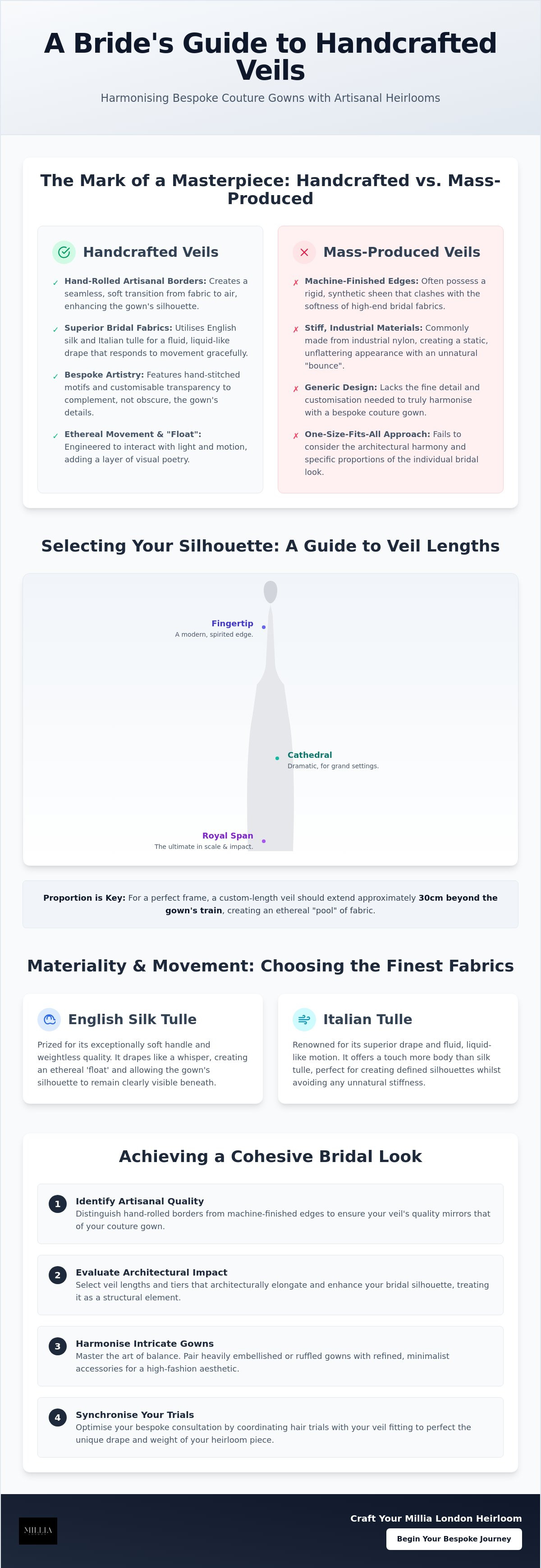
The silhouette of a bride is a study in geometry and grace. Selecting the correct length for your veil is not merely a matter of preference; it is a structural decision that dictates the movement of your entire ensemble. Fingertip lengths offer a spirited, contemporary edge that suits modern civil ceremonies. In contrast, the sweeping lines of a cathedral or royal span provide the necessary gravitas for more traditional settings. When exploring handcrafted veils, the goal is to create a seamless visual line that extends from the crown to the floor. A "barely there" aesthetic, achieved through a single tier of ultra-fine silk, offers a minimalist sophistication that allows the gown's architecture to remain the focal point. This approach is particularly effective for brides wearing high-neck or heavily embellished bodices.
Precision in measurement is vital for a bespoke result. To determine your ideal length, measure from the point where the veil will sit on your head down to the hem of your gown's train. A custom-length veil should typically extend approximately 30cm beyond the train to ensure it frames the dress rather than cutting across it. This additional length provides the ethereal "pool" of fabric that is so coveted in bridal photography. For a truly tailored finish, you may wish to discuss these specific proportions during bespoke bridal consultations where every centimetre is considered.
The Cathedral and Royal Spans
The cathedral and royal lengths are designed for impact and scale. A veil that extends 30cm beyond the gown's train creates a dramatic, uninterrupted flow of tulle that commands attention. These expansive styles are best suited to grand ceremony settings, such as historic cathedrals or stately manors, where the architecture can accommodate the sheer volume of fabric. Weight distribution becomes a primary concern at these lengths. Hand-stitching lace motifs onto the trailing edge adds significant weight; therefore, the choice of tulle must be balanced against the strength of the hairpiece to prevent pulling. Expertly constructed handcrafted veils account for this by using reinforced combs and strategic lace placement.
The Functional Beauty of the Blusher
The blusher tier remains a cherished tradition, yet its modern application is increasingly stylistic. This shorter, secondary layer adds a sense of ceremony and soft focus to the bride's face during the procession. To ensure functionality, the blusher must be cut to a length that clears your bridal jewellery and bouquet. It should never feel restrictive or interfere with your movement. Height plays a significant role in this choice. Taller brides can carry a longer blusher with ease, whilst more petite brides should opt for a slightly higher cut to maintain their proportions. This ensures the veil remains a delicate frame rather than a heavy mask.
Materiality and Movement: Choosing the Finest Bridal Fabrics
The tactile experience of a veil defines its presence within the bridal ensemble. To select from the finest handcrafted veils, one must first understand the technical behaviour of high-fashion textiles. Materiality isn't just about appearance; it's about the physics of movement. English silk tulle offers a distinct, architectural crispness, whilst soft Italian tulle provides a liquid-like fluidity that clings delicately to the silhouette. Choosing between these requires an analysis of your gown's fabric. A heavy silk satin demands a veil with enough substance to hold its own, whereas a delicate lace gown may require the weightless transparency of Italian silk. The weight of the fabric directly influences the "float" of the veil whilst walking. A lighter tulle will catch the air, creating an ethereal halo, while a weighted lace border ensures the veil follows your path with stately precision.
Colour matching remains a non-negotiable element of the couture process. Even a slight deviation between ivory, champagne, or blush tones can disrupt the visual harmony of the look. Master artisans often utilise bespoke dyeing techniques to ensure the veil's hue perfectly mirrors the gown's undertones. This level of precision is the hallmark of true luxury. It ensures that the veil feels like an organic extension of the dress rather than an afterthought. When you invest in handcrafted veils, you're securing a piece where every thread is chosen for its ability to interact with light and movement.
The Drape of English Tulle
Traditional English netting is a favourite amongst couture designers for its unique, structured weave. It possesses an ethereal nature that allows for the creation of bold, architectural shapes that won't collapse during the ceremony. This fabric is ideal for brides seeking a veil that maintains its volume and "lift" away from the face. To maintain the crispness of the tulle throughout your wedding day, ensure it is hung in a spacious, moisture-free environment. Avoid steam unless absolutely necessary, as the goal is to preserve the fabric's inherent tension and memory.
Lace Artistry and Embroidery
Choosing between lace types is a study in texture. Chantilly lace provides a flat, delicate floral border that feels romantic and timeless. In contrast, Alençon lace offers a corded, three-dimensional quality that adds significant depth to the veil's edge. The placement of these elements is equally vital; a mantilla style frames the face with continuous lace, whilst scattered motifs offer a more subtle, whimsical effect. Our meticulous hand-applied embroidery ensures every motif is secured with invisible stitches. This artisanal approach ensures there are no visible seams or unsightly glue marks, maintaining a flawless finish from every angle.
Harmonising the Veil with Your Bespoke Gown
Achieving a high-fashion bridal look requires a delicate equilibrium between the gown's architecture and the veil's transparency. When your ensemble features the dramatic volume of our signature ruffle gowns, the veil must act as a clarifying lens rather than a competing texture. Handcrafted veils should be curated to respect the gown's primary focal points. For the bold, architectural silhouettes found within the SS25 Bridal Collection, we often recommend a minimalist approach. A plain, cut-edge veil in a single tier provides the necessary length and movement without obscuring the intricate hand-work of the bodice or the cascading tiers of the skirt. It's about synergy. The veil should feel like a whisper that enhances the gown's voice, never a shout that drowns it out.
The "less is more" rule is a fundamental principle of elite styling. Whilst the instinct may be to match every lace motif, a plain veil often provides a more sophisticated contrast to a highly detailed couture piece. This choice creates a moment of visual rest, allowing the eye to appreciate the complexity of the tailoring. Conversely, a minimalist silk gown serves as the perfect canvas for a veil with heavy, hand-applied embroidery. Deciding where to place the detail is the key to a refined aesthetic. Explore our selection of handcrafted veils to discover how a bespoke finish can elevate your bridal profile.
Veiling the Signature Ruffle
Managing volume is an exercise in restraint. When pairing a veil with a gown defined by ruffles, the goal is to avoid visual clutter. A narrow, single-tier veil is the preferred choice for these architectural gowns. It allows the ruffles to breathe whilst providing the ethereal backdrop that only premium silk tulle can offer. Ensure the veil attachment centre is placed discreetly. It shouldn't disrupt the gown’s neckline or the flow of the hair. This creates a streamlined profile that feels intentional and entirely bespoke. Precision in placement ensures the veil follows the body's lines without catching on the gown's textures.
Coloured Veils for Avant-Garde Brides
Modern couture has moved beyond the traditional ivory palette. We see a rising demand for coloured wedding dresses in soft pastels, midnight blues, and even striking blacks. To maintain a sophisticated aesthetic, you must organise a bespoke colour-match for your accessory. A tinted tulle veil creates an ethereal, painterly effect when layered over a contrasting gown. It adds a tonal depth that feels both avant-garde and deeply romantic. Maintaining a sophisticated palette requires a keen eye for undertones. A subtle blush or champagne tint can warm the complexion whilst embracing a unique bridal colour. This approach signals a bride who is both a guardian of tradition and a bold innovator.
The Bespoke Journey: Crafting Your Millia London Heirloom
The journey toward sartorial excellence culminates in the bespoke creation of your veil. This is a collaborative dialogue between bride and artisan. Through Bespoke Bridal Consultations, we translate your aesthetic vision into a tangible masterpiece. It's a process that respects the heritage of your gown whilst introducing a unique, personal narrative. Every stitch is a deliberate act of design. This ensures the final piece isn't merely an accessory but a structural extension of the couture gown itself. We invite you to engage with the creative process where your preferences dictate the weight, transparency, and ornamentation of the tulle.
Preparation is the cornerstone of a flawless finish. We encourage brides to synchronise their hair trials with their final gown sessions to ensure the veil sits with absolute precision. When styling handcrafted veils, the angle of the comb and the weight of the tulle must be perfectly balanced against the chosen hairstyle. This attention to detail ensures your look remains secure and stunning throughout the ceremony. It's about more than aesthetics; it's about the quiet confidence that comes from a perfectly engineered fit. Bringing your veil to these appointments allows for the fine-tuning of the drape and ensures the length harmonises with your movement.
Time is a vital ingredient in the pursuit of perfection. The creation of a meticulously handcrafted veil typically requires a window of four to eight weeks. This duration allows for the intricate hand-stitching and bespoke dyeing processes that define our work. Artisanal creation cannot be rushed if the standard of excellence is to be maintained. The final flourish involves securing the piece with couture-grade combs and pins. These elements are designed to be invisible, providing a seamless integration into your bridal silhouette. Our artisans ensure that the attachment point is robust yet delicate, preserving the integrity of both your hair and the fine silk tulle.
The Consultation Experience
Explore your vision through a private appointment at our studio. Here, the couturier aligns the embroidery of our handcrafted veils with the gown’s unique lace motifs to create a unified aesthetic. We examine the interplay of light on the fabric and the way the lace frames the face. This level of expert styling is essential for achieving a red-carpet-worthy bridal profile. It ensures that every element of your ensemble works in concert to project an image of refined luxury. Our artisans possess an elite insider's eye for symmetry, ensuring the veil enhances your natural grace whilst maintaining the gown's architectural focus.
Preserving Your Handcrafted Heirloom
A handcrafted piece is a legacy for future generations. Preserving your veil requires careful storage in a moisture-controlled, acid-free environment, away from direct light. We recommend using pH-neutral tissue paper to support the folds and prevent the delicate silk tulle from becoming brittle. Artisanal construction ensures the piece can be worn by future generations, maintaining its clarity and strength over decades. This durability is why our pieces are considered true heirlooms. Enquire about your bespoke bridal consultation to begin your journey toward a timeless bridal legacy.
Define Your Bridal Legacy
Mastering the architectural alignment of a veil ensures your couture gown remains the undisputed centrepiece of your ensemble. You now possess the expert knowledge required to navigate the technical nuances of silk tulle and artisanal lace with quiet confidence. Selecting handcrafted veils is a profound invitation to participate in a storied tradition of excellence. It's a deliberate choice to prioritise bespoke couture craftsmanship over the ephemeral nature of mass production. As specialists in signature ruffle and coloured gowns, we ensure every accessory reflects the visionary spirit of the modern bride. Every stitch serves the final silhouette.
Our dedication to the craft has been featured in international high-fashion publications, cementing our place at the pinnacle of artisanal bridal wear. We invite you to explore a world where heritage meets bold innovation. Begin your bespoke journey today and secure a piece that will be cherished for generations to come. Your wedding day deserves the meticulous attention of a visionary artisan.
Discover the SS25 Bridal Collection and Handcrafted Accessories
Frequently Asked Questions
How do I choose the right length for handcrafted veils?
Align the length of your veil with the architecture of your gown by measuring from the crown to the floor, ensuring the tulle extends approximately 30cm beyond the train's hem. This creates a seamless visual flow that elongates the bridal silhouette. Consider the scale of your venue; dramatic cathedral spans suit grand historic settings, whilst fingertip lengths offer a spirited, contemporary edge for modern civil ceremonies.
Can I customise the embroidery on my veil to match my gown?
Bespoke customisation of embroidery is a cornerstone of our artisanal service. During a consultation, we align specific lace motifs and thread work to mirror the unique textures of your bespoke couture gown. This meticulous process ensures the veil acts as a harmonious extension of the ensemble. We utilise traditional hand-stitching techniques to preserve the delicacy of the design and ensure a flawless, couture finish.
What is the difference between English tulle and Italian tulle?
English tulle possesses a structured, hexagonal weave that provides a crisp, architectural drape. It's the preferred choice for brides seeking volume and defined, ethereal shapes. Italian tulle is celebrated for its ultra-fine, liquid-like fluidity. It offers a soft transparency that clings delicately to the silhouette. Both fabrics are selected for their superior weightlessness and ability to interact beautifully with light.
How far in advance should I order a bespoke handcrafted veil?
Secure your order approximately four to eight weeks before your final gown fitting. This timeline allows our artisans to execute the time-intensive hand-stitching and bespoke dyeing required for a truly handcrafted veil. Early ordering ensures the accessory is available for your hair trials. It provides the necessary window for the meticulous engineering of every artisanal detail to meet the Millia London standard.
Does a coloured wedding dress require a matching coloured veil?
Coloured wedding dresses often benefit from a bespoke colour-matched veil to maintain a sophisticated tonal palette. A tinted tulle veil creates a painterly, layered effect that enhances the gown's depth without overwhelming the eye. You may choose a subtle blush or champagne to warm the complexion, or a direct match for a bold, monochromatic statement. The goal is always visual harmony and refined authority.
How do I secure a heavy cathedral veil in my hair?
Secure expansive, heavy veils using couture-grade metal combs reinforced with discreet hairpins. Your hairstylist should create a firm foundation, such as a hidden braid or structured updo, to anchor the weight effectively. This prevents the tulle from pulling whilst you move through your ceremony. Precision in placement ensures the veil remains a comfortable, elegant extension of your silhouette throughout the entire procession.
Can a handcrafted veil be altered after it has been made?
Alterations to handcrafted veils are possible but require the delicate touch of a specialist artisan. Lengths can be refined and lace motifs can be repositioned to better suit a modified gown silhouette. However, the integrity of fine silk tulle is delicate; therefore, significant changes should be discussed during your bespoke bridal consultations. We prioritise the preservation of the fabric's original drape and ethereal movement.
What is the best way to steam a silk tulle veil before the wedding?
Utilise a professional-grade handheld steamer on its lowest setting to gently release creases from the silk tulle. Hold the steamer several centimetres away from the fabric to prevent moisture spotting or heat damage. It's best to hang the veil in a spacious area 24 hours before the ceremony to allow the fibres to relax naturally. Avoid any direct contact with iron plates to protect the artisanal finish and weightless clarity.

